Skip to content





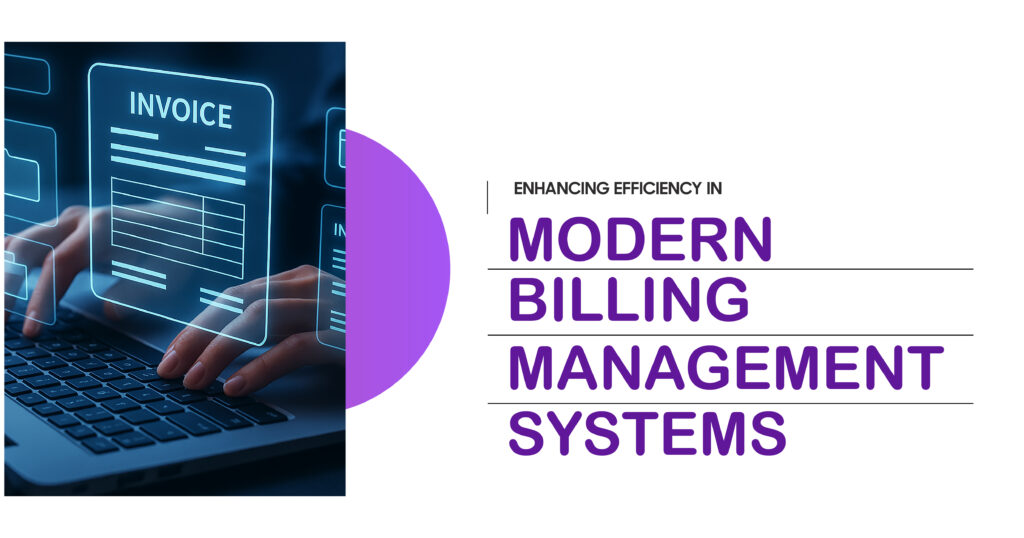
In today’s fast-paced digital economy, efficient financial management is more than a back-office necessity—it’s a strategic advantage. Businesses rely on precise, streamlined systems to handle invoicing, payments, revenue tracking, and reporting in real time. Enter the billing management system—a cornerstone of modern financial operations designed to automate processes, reduce errors, and improve overall productivity.
Understanding Invoicing Software and Its Impact on Business Efficiency
At its core, invoicing software serves as the foundation of any billing management system. It automates repetitive tasks like invoice creation, distribution, and tracking, eliminating the need for manual data entry and paper-based processes.
Beyond automation, modern invoicing tools integrate directly with CRMs, ERP systems, and accounting software, ensuring that every transaction is accurate and synchronized across departments. This integration creates a unified financial ecosystem, empowering finance teams to:
- Generate and send invoices instantly
- Track due dates and payment statuses in real time
- Reduce administrative costs
- Improve cash flow forecasting
A well-implemented invoicing system doesn’t just save time—it enhances transparency and reliability, both internally and for clients. The result? Faster payments, fewer disputes, and greater operational efficiency.
The Role of Invoicing Software in Streamlining Payment Processing
Efficient payment processing is at the heart of financial stability. Businesses that rely on outdated systems often face delays, data discrepancies, and reconciliation errors. Modern billing management systems simplify this process through integrated payment gateways that handle multiple transaction types—credit cards, ACH transfers, digital wallets, and recurring payments—all in one dashboard.
Here’s how invoicing software streamlines payment workflows:
| Feature | Function | Benefit |
| Automated Payment Reminders | Sends alerts before and after due dates | Reduces late payments and improves cash flow |
| Multiple Payment Options | Supports various currencies and methods | Increases customer convenience and satisfaction |
| Secure Gateways | Uses encryption and PCI-compliant processes | Ensures safe and compliant transactions |
| Real-Time Payment Status Updates | Tracks received, pending, or failed payments instantly | Improves visibility and accountability |
| Recurring Billing Management | Automates subscriptions or retainer-based invoicing | Simplifies predictable revenue cycles |
Enhancing Financial Reporting with Invoicing Solutions
Data is the lifeblood of strategic decision-making. Financial reporting within a billing management system turns raw transaction data into actionable insights. Advanced invoicing platforms generate customized reports that help businesses track revenue trends, identify cost inefficiencies, and plan for growth.

Key financial metrics—like outstanding receivables, profit margins, and recurring income—are available in real time, offering executives a clear view of the company’s financial health.
Some systems also integrate predictive analytics, enabling users to forecast revenue or detect anomalies early. By automating reporting, businesses reduce the risk of human error and ensure compliance with accounting standards and audit requirements.
With clear, data-backed insights, finance teams can make smarter, faster, and more confident business decisions.
Effective Expense Tracking Through Automated Billing Systems
Keeping track of every expense is crucial to maintaining profitability. Automated billing systems take the guesswork out of expense management by automatically categorizing, tagging, and recording expenses as they occur.
Whether it’s vendor payments, subscription renewals, or project costs, automation ensures accuracy and traceability at every step. Many systems also integrate with expense management tools and bank feeds, syncing real-time data into a single dashboard.
Benefits of automated expense tracking include:
- Reduction in manual data entry and errors
- Simplified audit preparation
- Improved budget management
- Enhanced visibility of operational costs
Optimizing Revenue Management with Subscription Billing Features
As more companies shift to subscription-based business models, managing recurring revenue efficiently has become essential. Modern billing management systems offer subscription billing features that automate renewals, usage-based pricing, and tiered payment structures.
For SaaS, healthcare, and professional service industries, this automation streamlines customer retention, reduces churn, and improves forecasting accuracy.
| Subscription Billing Feature | Business Benefit |
| Automated Renewals | Eliminates missed invoices and manual billing cycles |
| Usage-Based Billing | Aligns pricing with actual service usage for fairness and transparency |
| Revenue Recognition Tools | Ensures compliance with ASC 606 and IFRS 15 |
| Tiered Pricing Models | Accommodates diverse customer needs and scales revenue growth |
| Dunning Management | Handles failed payments and reattempts automatically |
Achieving Accurate Account Reconciliation Using Modern Tools
Account reconciliation—the process of ensuring records match actual transactions—is one of the most time-consuming tasks in finance. Modern billing management systems streamline this through automation, real-time syncing, and AI-powered matching algorithms.
Instead of manually cross-referencing spreadsheets, reconciliation tools automatically compare invoices, bank statements, and payment records, flagging discrepancies instantly.
Key advantages include:
- Reduced financial discrepancies and manual workload
- Faster month-end and year-end closing cycles
- Accurate audit trails and compliance documentation
- Improved internal transparency
Adopting Best Practices for Improved Business Operations
To fully leverage a billing management system, companies must adopt best practices that enhance both system performance and team productivity. These include:
- Centralizing Financial Data: Integrate all billing, invoicing, and payment tools into a unified platform.
- Automating Routine Tasks: Reduce manual work for recurring payments, invoicing, and report generation.
- Standardizing Processes: Ensure all financial records follow consistent naming, categorization, and approval workflows.
- Ensuring Security Compliance: Use systems with encryption, user permissions, and audit logs to protect sensitive financial data.
- Regular System Audits: Review software performance, reconciliation accuracy, and financial compliance regularly.
- Training Teams: Empower users with training and guidelines to ensure they utilize every feature effectively.
Maximize Efficiency with Indigo Billing’s Smart Billing Management System
At Indigo Billing, we believe in simplifying financial complexity through innovation. Our smart billing management system is designed to help businesses automate billing, streamline payments, and manage revenue seamlessly—all from one integrated platform.
With Indigo Billing, your finance team gains more than a software solution—they gain a strategic partner dedicated to helping your business grow smarter, faster, and more efficiently.
Streamline your billing. Strengthen your revenue. Simplify your growth. Contact Indigo Billing today to learn how our billing management system can transform your financial operations.

FAQs
How does invoicing software streamline payment processing for businesses?
Invoicing software automates payment reminders, integrates with gateways, and processes transactions in real time. This speeds up collections, reduces late payments, and improves cash flow visibility.
In what ways can invoicing solutions enhance financial reporting capabilities?
Modern invoicing systems generate data-driven reports, track KPIs, and forecast revenue trends. These insights help businesses make informed decisions and maintain financial accuracy.
What are the benefits of using automated billing systems for effective expense tracking?
Automated systems categorize and record expenses instantly, minimizing human error. This improves budget control, transparency, and long-term financial planning.
How can subscription billing features optimize revenue management for companies?
Subscription billing automates renewals and revenue recognition while accommodating flexible pricing models. It ensures predictable income and enhances customer retention.
What tools can businesses use to achieve accurate account reconciliation with invoicing software?
AI-powered reconciliation tools compare records automatically across systems. They flag inconsistencies, accelerate closing cycles, and maintain accurate audit trails.