Skip to content







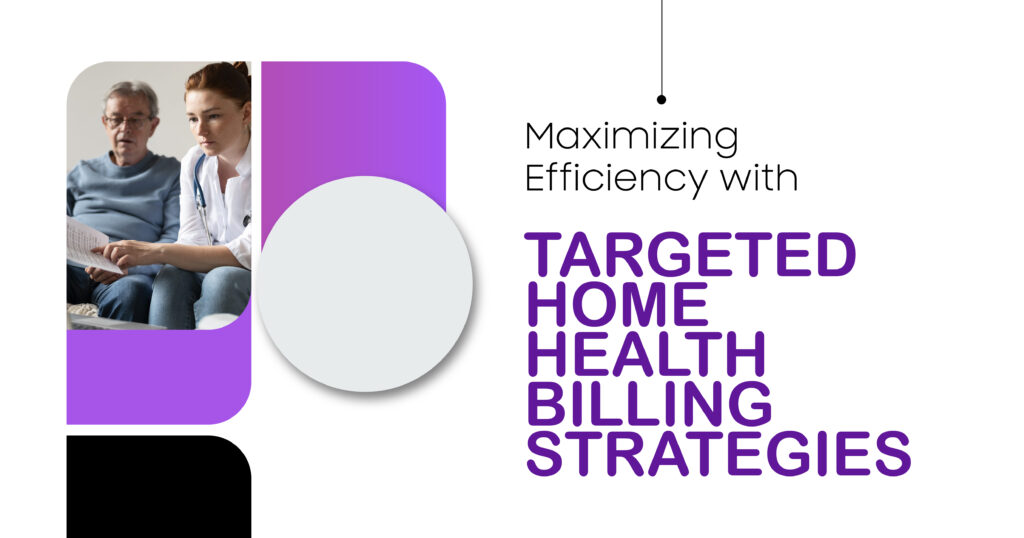
Home health care providers face one of the most complex billing environments in the healthcare industry. Between evolving Medicare regulations, multi-payer reimbursements, and intricate coding requirements, even a minor error in documentation or submission can result in costly denials. That’s why an efficient home health billing strategy isn’t just about processing claims, it’s about sustaining financial health, compliance, and patient care quality.
At Indigo Billing, we understand that managing home health billing requires precision, compliance, and adaptability. By implementing targeted strategies, healthcare organizations can streamline processes, enhance reimbursements, and strengthen the overall home healthcare revenue cycle, from claim creation to final payment.
Home Health Reimbursement and Billing Insights
Home health reimbursement operates under specific guidelines set by Medicare, Medicaid, and private payers. The billing process is heavily influenced by patient eligibility, clinical documentation, visit frequency, and care plan accuracy.
The shift to the Patient-Driven Groupings Model (PDGM) by CMS has further underscored the importance of data accuracy. Under PDGM, payments are determined by patient characteristics and needs rather than the number of visits. This means agencies must ensure that clinical documentation aligns perfectly with billing data.

Key factors influencing reimbursement include:
- Accurate OASIS submissions
- Comprehensive care plans reflecting medical necessity
- Timely RAP (Request for Anticipated Payment) and final claim submissions
- Compliance with payer-specific regulations
When managed effectively, proper reimbursement practices ensure steady cash flow, reduce payment delays, and maintain compliance across all home health operations.
Understanding Medicare Billing for Home Health Services
Medicare billing for home health comes with unique challenges. Claims must follow strict CMS guidelines, requiring detailed clinical documentation and consistent tracking of visits, supplies, and episodes of care.
Home health agencies must also adhere to the Consolidated Billing Rule, meaning all services and supplies related to home health episodes must be billed through the agency rather than separate providers. Failure to consolidate properly can result in denials or compliance audits.
The key to success in Medicare billing lies in:
- Using HIPPS codes accurately
- Verifying patient eligibility and episode timing
- Ensuring clean claim submission through EMR integration
- Tracking submission and payment timelines
Key Components of Home Health Coding
Coding is the foundation of accurate billing and reimbursement. Home health coding must reflect both the clinical complexity of the patient and the services provided. Under PDGM, diagnosis coding plays a pivotal role in determining case-mix weights and payment groupings.
The primary diagnosis should justify the patient’s need for skilled services, while secondary diagnoses must capture all comorbidities affecting care.
Key elements of effective home health coding include:
| Coding Component | Impact on Billing Accuracy | Best Practice |
| Primary Diagnosis | Determines case-mix group and reimbursement level | Align with physician documentation |
| Secondary Diagnoses | Adjusts payment for comorbidities | Capture all relevant conditions |
| ICD-10 Compliance | Ensures regulatory accuracy | Update coding standards regularly |
| OASIS Alignment | Affects clinical grouping | Verify codes match the patient assessment |
Navigating Home Health Insurance Claims
Submitting home health insurance claims involves more than data entry—it’s a detailed process that demands accuracy, consistency, and payer-specific customization. Each insurance provider has unique billing requirements, claim formats, and documentation standards.
To navigate this efficiently, agencies should:
- Verify insurance coverage before initiating care.
- Check authorization requirements for visits or treatments.
- Ensure documentation consistency between clinical and billing teams.
- Monitor claim submission timelines to prevent missed deadlines.
- Use electronic claim submission systems for faster processing.
Essentials of Hospice Billing
While hospice billing falls under the broader umbrella of home health billing, it has distinct requirements tied to Medicare’s Hospice Benefit. Hospice care involves multiple levels—routine home care, continuous care, inpatient respite care, and general inpatient care—each with specific billing codes and documentation criteria.
Hospice billing requires close coordination between clinical documentation and billing teams to ensure that the level of care billed aligns with the services provided. Errors can lead to overpayment audits or delayed reimbursements.
Key elements of accurate hospice billing include:
- Timely Notice of Election (NOE) and Notice of Termination/Revocation (NOTR) submissions
- Accurate level-of-care coding
- Verification of physician certifications and recertifications
- Thorough documentation of visits and services rendered
Streamlining Medical Billing for Home Care
Medical billing for home care services extends beyond clinical accuracy—it requires efficiency in every workflow, from scheduling visits to tracking documentation and payments. Delays in data entry or missing notes can halt cash flow and strain agency operations.
The best way to streamline home care billing is through automation and system integration. Advanced billing solutions like Indigo Billing connect EMR platforms with payers, ensuring seamless data flow between clinical and financial systems.
Automation reduces manual entry, flags inconsistencies, and simplifies charge capture, enabling staff to focus on care delivery rather than paperwork.
Streamlined billing leads to:
- Shorter billing cycles
- Lower denial rates
- Faster reimbursements
- Greater transparency across departments
Optimizing Home Health Payment Processes
A robust home health payment process ensures consistent cash flow and accurate reimbursements. Optimizing this process involves improving every stage of the payment lifecycle—from pre-billing verification to final reconciliation.
Agencies should implement claim scrubbing tools, real-time denial alerts, and payment analytics to monitor trends and identify bottlenecks. Integration with clearinghouses also allows for instant feedback on claim status, minimizing delays.
To optimize payments:
- Establish pre-billing audits to ensure complete documentation
- Use electronic remittance advice (ERA) for faster posting
- Track denial patterns to identify recurring issues
- Leverage predictive analytics for cash flow forecasting
Strengthen Your Revenue Cycle with Indigo Billing’s Home Health Solutions
At Indigo Billing, we understand that the key to sustainable success in home health care lies in financial precision. Our home health billing solutions are designed to help agencies navigate complex regulations, optimize payment cycles, and maintain compliance without sacrificing care quality.
Our platform is purpose-built for healthcare providers who value efficiency, transparency, and financial control.
Empower your agency with technology that cares as deeply as you do. Contact Indigo Billing today to strengthen your home health care revenue cycle and streamline every step of your billing process.

FAQs
What are the critical factors in Medicare billing for home health services that ensure accurate reimbursement?
Timely RAP and final claim submissions, accurate OASIS data, and correct HIPPS coding are crucial. Each ensures compliance with CMS standards and minimizes payment delays.
How do key components of home health coding impact the efficiency of the billing process?
Accurate coding determines reimbursement grouping and prevents claim denials. Proper sequencing and alignment with documentation improve both compliance and cash flow.
What steps should be followed to effectively manage home health insurance claims and reduce denials?
Verify coverage, maintain documentation consistency, and use automated claim scrubbers. Monitoring payer feedback helps detect and correct recurring errors.
What are the essential elements to consider in hospice billing to ensure seamless payment processes?
Timely NOE and NOTR submissions, correct level-of-care coding, and valid certifications are essential. These ensure uninterrupted reimbursements and compliance.
How can one optimize home health care revenue cycle management to enhance overall financial performance?
Integrating automation, analytics, and compliance checks across billing and payments boosts accuracy. Real-time monitoring helps maintain a steady, predictable cash flow.